
Книги
Putnam
J.Taylor
C.F.S. Birthplace of air power
29
J.Taylor - C.F.S. Birthplace of air power /Putnam/

1913: C.F.S. training aircraft. Above: Left to right: Avro 500, two B.E.4's, Henri Farman, Short S.27, two Maurice Farmans. Below: the same line-up from the other end.

Pictured in 1917, one of the immaculate Avro 504J’s of Smith-Barry’s school of Special Flying at Gosport.

Avro 504K’s at C.F.S. Upavon on 30th January 1924. On that day the C.F.I., Squadron Leader Reggie Smart, tested Flying Officer (later Air Chief Marshal Sir Walter) Dawson on Avro 504K E3567 (second from left) and awarded him his A.2 instructor’s category.

Wingwalking on Avro’s helped to enliven many routine flying hours for Royal Air Force pilots in the 1920’s.
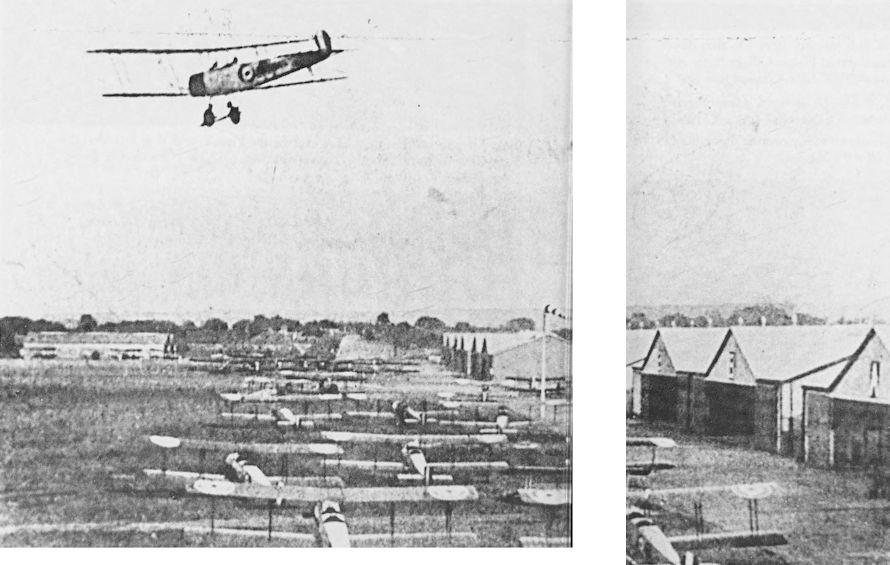
The scale of flying activity at the C.S.F. is reflected by this photograph of 504’s and Sopwith Camels at the airfield.

Aerial photograph of C.F.S. Upavon taken from an Avro 504.
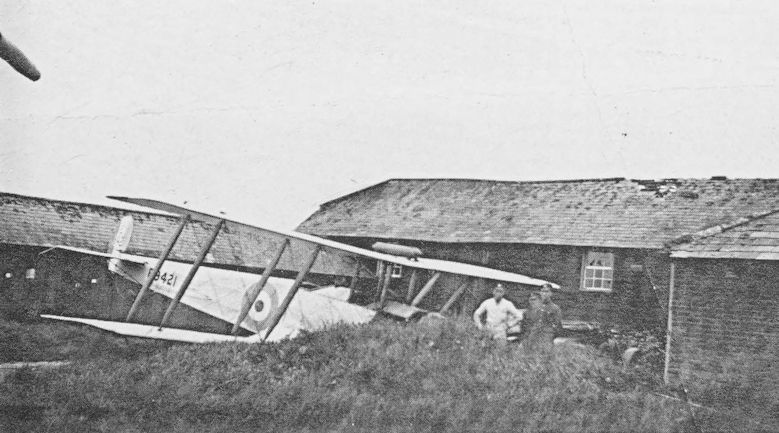
Aftermath of the spot-landing competition at Upavon in 1924, This 504K (E9421) removed tiles from the roof in the background before ending up in the car park.
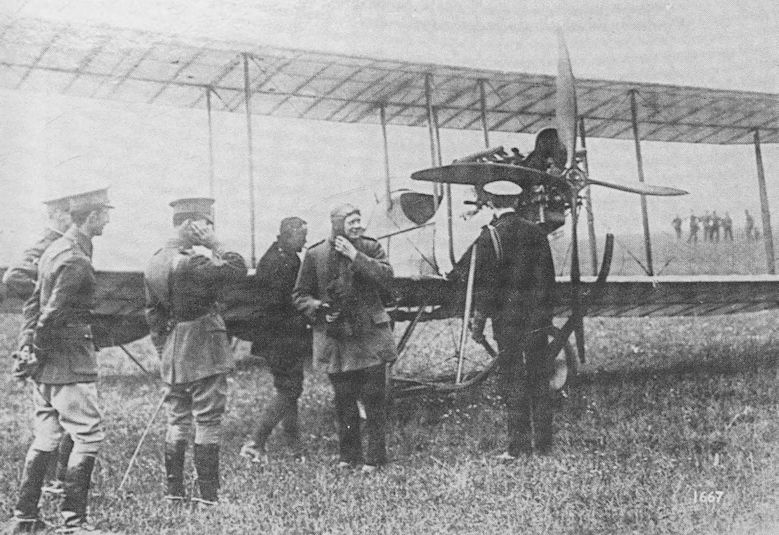
During a visit to the C.F.S. on 6th November 1913, the Rt. Hon. Winston S. Churchill, First Sea Lord, flew in this B.E.2 piloted by Major Gerrard.
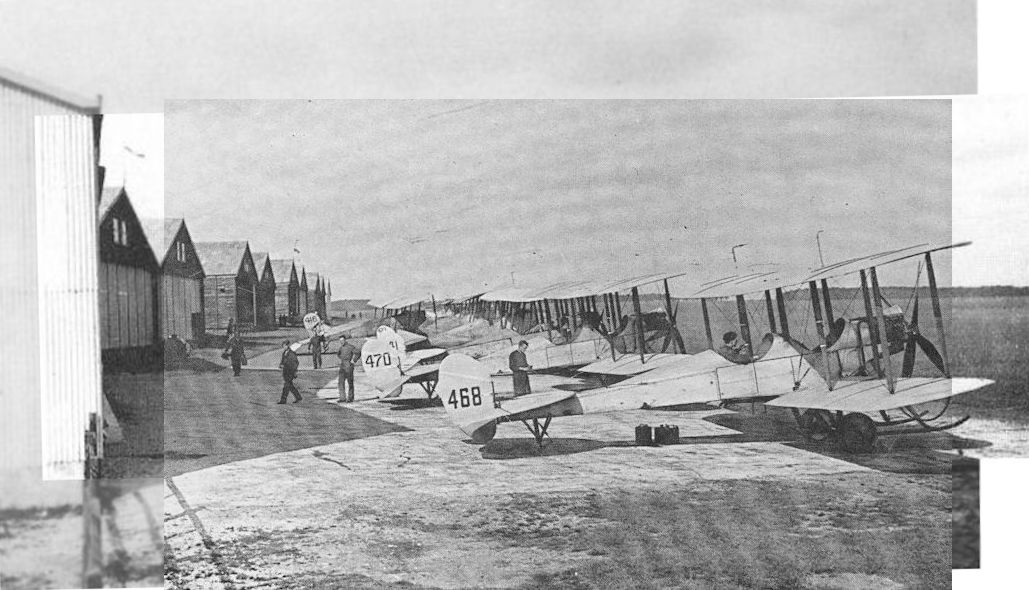
CENTRAL FLYING SCHOOL, UPAVON. - A view of the machines of A, B and C Flights from the rear, with the B.Es. of A Flight nearest the camera.
Line-up of BE2 early variants at the Central Flying School at Upavon in July, 1914 (note that '416 is a BE6). The type proved to be not only a useful operational aeroplane but also a very effective trainer type. B.E.2a, 468, was built by the Coventry Ordnance Works.
1914: C.F.S. training aircraft. B.E.2a’s No. 468, 470 and 441; B.E.8 No. 423; and B.E.6 No.416.
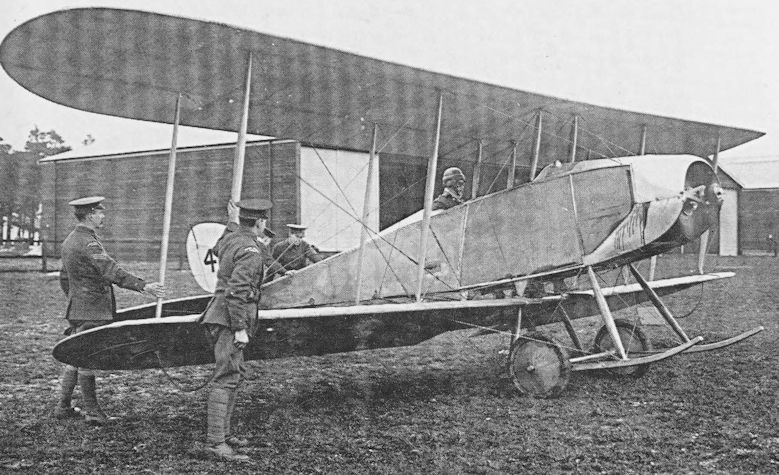
B.E.4’s No. 416 and 417 gave good service at the C.F.S. from December 1912 until the summer of 1914.
1913: C.F.S. training aircraft. Above: Left to right: Avro 500, two B.E.4's, Henri Farman, Short S.27, two Maurice Farmans. Below: the same line-up from the other end.
CENTRAL FLYING SCHOOL, UPAVON. - A view of the machines of A, B and C Flights from the rear, with the B.Es. of A Flight nearest the camera.
Line-up of BE2 early variants at the Central Flying School at Upavon in July, 1914 (note that '416 is a BE6). The type proved to be not only a useful operational aeroplane but also a very effective trainer type. B.E.2a, 468, was built by the Coventry Ordnance Works.
1914: C.F.S. training aircraft. B.E.2a’s No. 468, 470 and 441; B.E.8 No. 423; and B.E.6 No.416.
Line-up of BE2 early variants at the Central Flying School at Upavon in July, 1914 (note that '416 is a BE6). The type proved to be not only a useful operational aeroplane but also a very effective trainer type. B.E.2a, 468, was built by the Coventry Ordnance Works.
1914: C.F.S. training aircraft. B.E.2a’s No. 468, 470 and 441; B.E.8 No. 423; and B.E.6 No.416.

This rare two-seat conversion of an S.E.5A, D3554, was operated at Upavon in 1918.
1913: C.F.S. training aircraft. Above: Left to right: Avro 500, two B.E.4's, Henri Farman, Short S.27, two Maurice Farmans. Below: the same line-up from the other end.
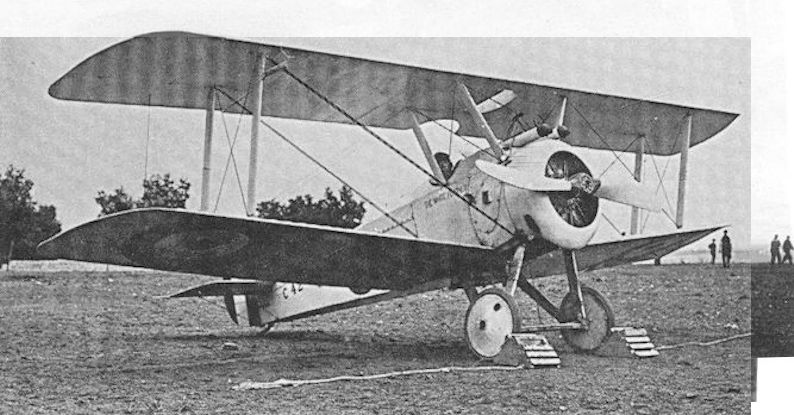
Classic dog-fighter of the 1914-18 War, the Sopwith F.1. Camel.
C42 unit and location unknown
Aircraft used at the C.F.S. during the First World War included this Sopwith F1 Camel two-seat conversion, No. C42 The White Feather.
C42 unit and location unknown
Aircraft used at the C.F.S. during the First World War included this Sopwith F1 Camel two-seat conversion, No. C42 The White Feather.
The scale of flying activity at the C.S.F. is reflected by this photograph of 504’s and Sopwith Camels at the airfield.
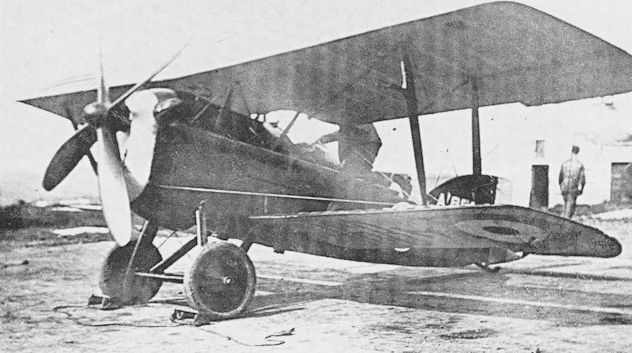
Photographed at Upavon in 1918, the Vickers F.B.16D prototype fighter was used as a personal transport by Major J. T. B. McCudden, V.C., one of the R.F.C.’s top fighter aces.
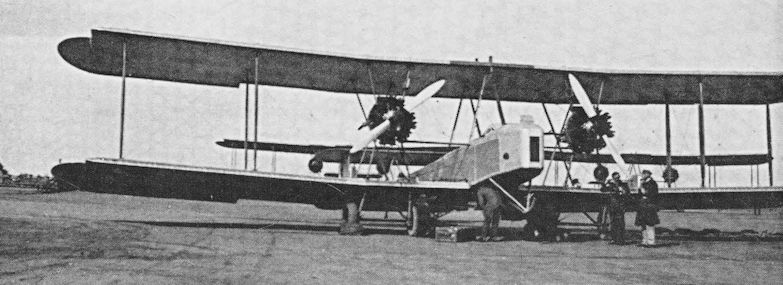
The Vickers Vimy in which a team from the C.F.S. Examining Wing flew from Cairo to Abu Sueir, in Egypt, in 1930-31.
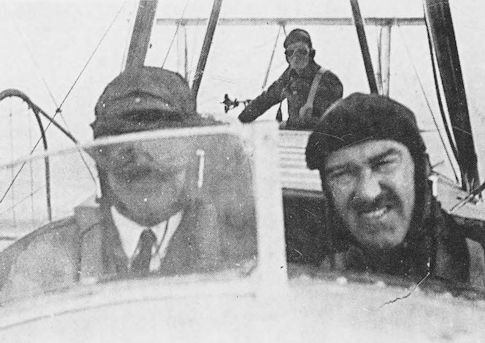
Squadron Leader Harold Whistler (C.F.I.) and the Earl of Bandon (right) photographed in flight in the cockpit of the Vimy by Flight Lieutenant W. E. P. Johnson.
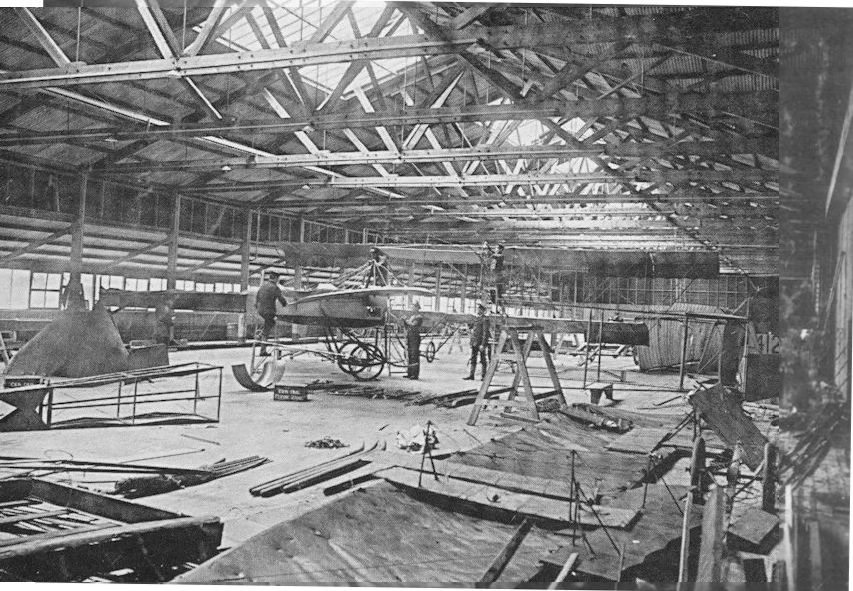
Riggers at work on Deperdussin monoplane No. 419.
Workshops at the Central Flying School, one ot the elements established when the British created their military air arms in 1912. The rudder to the right shows aircraft 412, a Henri-Farman (formerly serial No 208), one of two Henri-Farmans acquired by the Royal Flying Corps when it formed in 1912. Like so many of the early aeroplanes used by European nations these were of French manufacture.
Workshops at the Central Flying School, one ot the elements established when the British created their military air arms in 1912. The rudder to the right shows aircraft 412, a Henri-Farman (formerly serial No 208), one of two Henri-Farmans acquired by the Royal Flying Corps when it formed in 1912. Like so many of the early aeroplanes used by European nations these were of French manufacture.
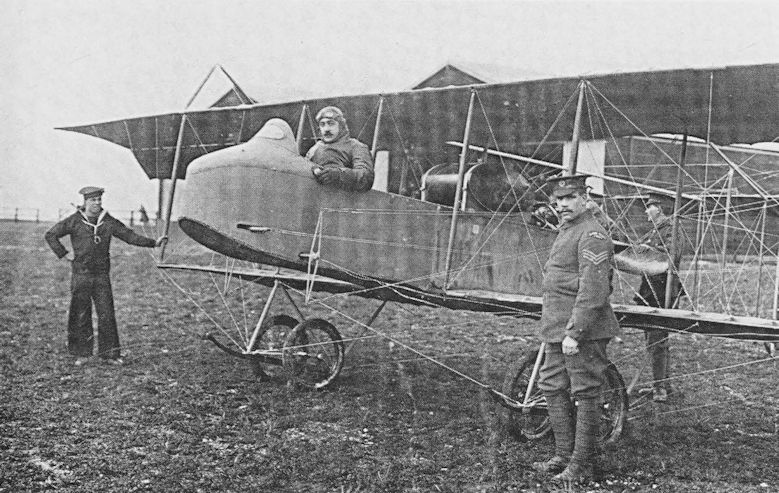
1913: Major Gerrard preparing to take off in a Henri Farman. Note the mix of Navy and Army uniforms.
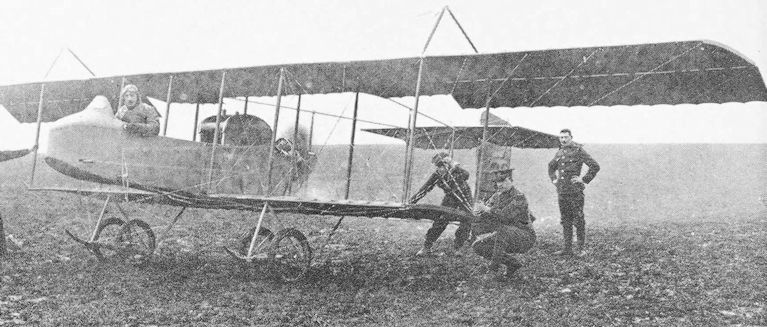
1913: Major Gerrard preparing to take off in a Henri Farman. The original engineering staff at Upavon came largely from the Royal Navy, hence the mixture of uniforms.
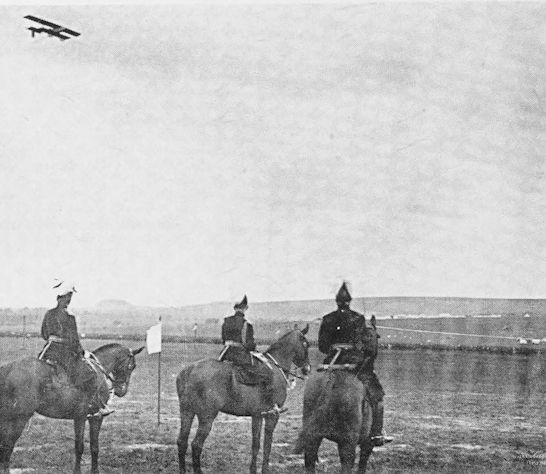
Army officers taking a close look at the Royal Flying Corps in June 1914, when the entire Military Wing was concentrated at Netheravon for a month of intensive training.
1913: C.F.S. training aircraft. Above: Left to right: Avro 500, two B.E.4's, Henri Farman, Short S.27, two Maurice Farmans. Below: the same line-up from the other end.
Workshops at the Central Flying School, one ot the elements established when the British created their military air arms in 1912. The rudder to the right shows aircraft 412, a Henri-Farman (formerly serial No 208), one of two Henri-Farmans acquired by the Royal Flying Corps when it formed in 1912. Like so many of the early aeroplanes used by European nations these were of French manufacture.
Riggers at work on Deperdussin monoplane No. 419.
Riggers at work on Deperdussin monoplane No. 419.
1913: C.F.S. training aircraft. Above: Left to right: Avro 500, two B.E.4's, Henri Farman, Short S.27, two Maurice Farmans. Below: the same line-up from the other end.
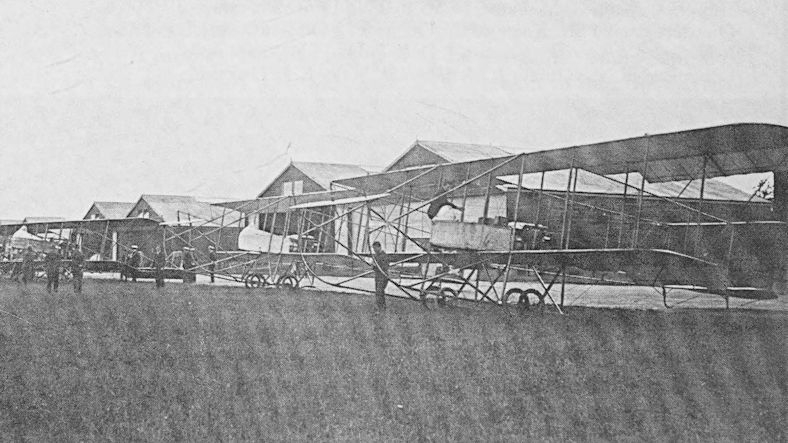
1914: C.F..S. training aircraft. Maurice Farman Shorthorn and two Longhorns.

Lieutenant A. M. Longmore, one of the original instructors, ended a long career as Air Chief Marshal Sir Arthur Longmore.
1914: C.F..S. training aircraft. Maurice Farman Shorthorn and two Longhorns.